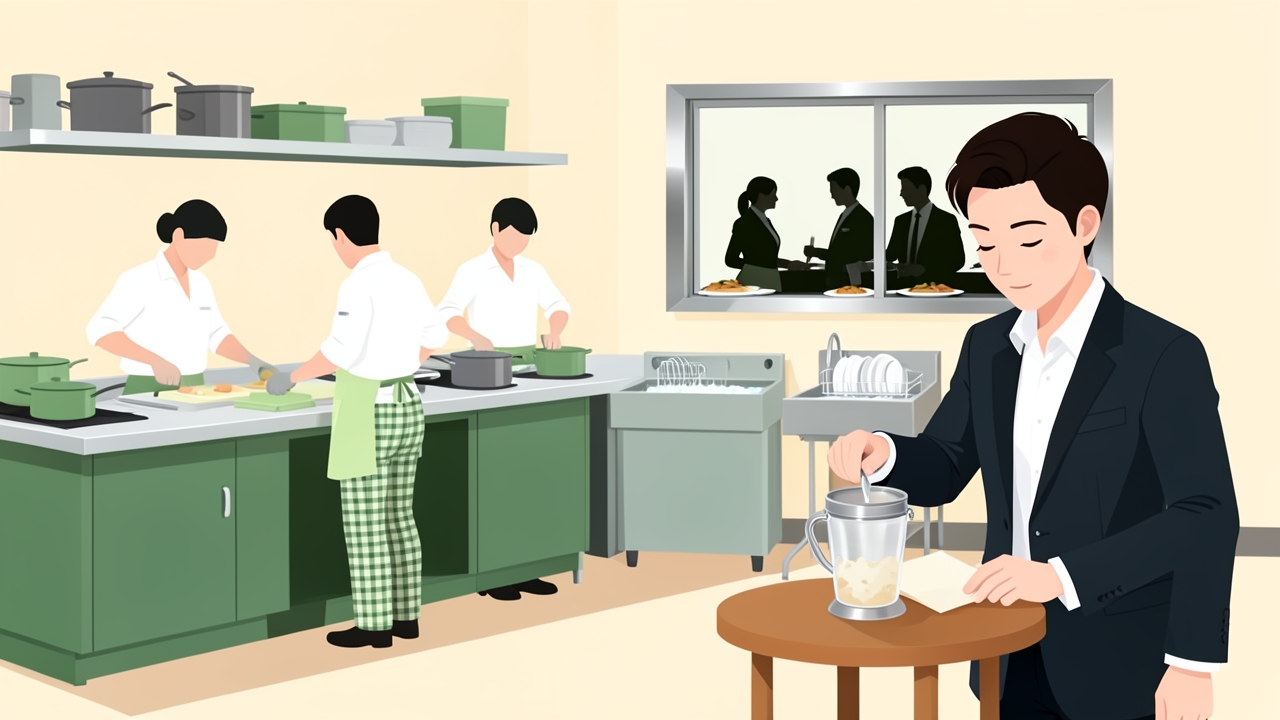
Yes — under the DOL's 2018 tip regulations, employers that don't take a tip credit may include back-of-house staff (cooks, dishwashers, expediters) in a tip pool, as long as no manager or supervisor keeps any part of the tips. Shared tips to BOH workers are fully taxable wages; the catch is that most BOH occupations don't qualify for the 2025 No Tax on Tips deduction.
Can Back-of-House Employees Legally Receive Shared Tips?
Under the DOL's 2018 tip regulations (dol.gov/agencies/whd/flsa/tips), employers that do not take a tip credit may run a tip pool that includes back-of-house employees. One bright line: managers and supervisors cannot keep any portion of the pool, directly or indirectly. Tips distributed to BOH staff are fully taxable — federal income tax plus the employee's 7.65% FICA share — reported exactly like a server's tips. Mandatory service charges and auto-gratuities are not tips at all; they are wages under Rev. Rul. 2012-18.
Where BOH workers lose out is the new deduction. For tax years 2025–2028, workers can deduct up to $25,000 of qualified tips on Schedule 1-A (Form 1040), whether or not they itemize. But qualified tips must come from an occupation the Treasury recognizes as customarily tipped on or before December 31, 2024. The gatekeeper is the Treasury Tipped Occupation Codes list — 71 codes in 8 categories, numbered 101–810, updated June 28, 2026. Code 101 covers bartenders; most BOH roles like line cooks and dishwashers are not listed. If an employee received any tips from a non-qualifying occupation, the 2026 Form W-2 Box 14b must show code '000' alongside any qualifying TTOC.
How BOH Tip Sharing Is Reported: W-2 Boxes and Employer Duties
Tips a BOH worker reports to the employer go in W-2 Box 1 (wages, tips, other compensation), Box 5 (Medicare wages and tips), and Box 7 (Social Security tips). Starting with 2026 Forms W-2, total cash tips the employee reported to the employer also appear in Box 12 with code TP. Employees must report cash tips of $20 or more in a month from one employer in a signed written statement by the 10th of the following month; no specific form is required. Tips never reported to the employer go on Form 4137, filed with Form 1040. Failing to report tips to the employer can trigger a penalty of 50% of the Social Security and Medicare tax owed on those tips.
Large food or beverage establishments — more than 10 employees on a typical business day in the prior year — must file Form 8027 (irs.gov/forms-pubs/about-form-8027) by the last day of February, or March 31 if e-filed, with extensions via Form 8809. When reported tips fall below 8% of gross receipts, the employer allocates the shortfall. Allocated tips appear only in W-2 Box 8, with nothing withheld, and the employee generally must report them on Form 4137 unless adequate records show they actually received less.
Employers still owe FICA on shared tips paid to BOH staff and can claim the FICA tip credit on Form 8846 — never Form 4137 or Form 8027. The credit equals 7.65% of creditable tips: reported tips minus the tips needed to bring monthly wages up to $5.15 per hour for food or beverage employers (the FLSA minimum wage frozen as of January 1, 2007). It flows to Form 3800 as a non-refundable general business credit, and unused credit carries back 1 year and forward 20 years. For wage reporting details see irs.gov/forms-pubs/about-form-w-2.
Worked Example: A Server–Cook Tip Pool with Real Numbers
A server works 100 hours in a month at $3.75/hour ($375 in wages) and reports $450 in tips, of which $90 goes into a pool shared with a line cook. Form 8846 credit on the server's tips: $5.15 × 100 hours = $515; $515 − $375 = $140 not creditable; $310 creditable; $310 × 7.65% = $23.72 of employer credit. The cook's $90 of shared tips are taxable income to the cook — but because a line cook is not on the TTOC list, that $90 does not qualify for the No Tax on Tips deduction, and the cook's 2026 W-2 Box 14b would carry code '000'. The server can count their $360 of retained tips toward the $25,000 deduction if MAGI is under $150,000 ($300,000 if married filing jointly) — assuming the server's occupation is on the Treasury list.
Who Qualifies for the $25,000 Deduction in a Tip Pool
| Worker | Occupation on TTOC list? | Shared tips taxable? | Deduction on Schedule 1-A? |
|---|---|---|---|
| Server | Yes (customarily tipped) | Yes — income tax + 7.65% FICA | Yes, up to $25,000, if MAGI under $150,000 ($300,000 joint) |
| Bartender | Yes — code 101 | Yes | Yes, same limits |
| Line cook | No | Yes | No — W-2 Box 14b shows code 000 |
| Dishwasher | No | Yes | No — code 000 |
The deduction covers voluntary cash and charged tips — including tips received through tip sharing — but only if the worker's own occupation is on the Treasury list (customarily tipped on or before December 31, 2024). A server who contributes to the pool can deduct tips they kept, with records. A cook receiving shared tips generally cannot claim the deduction, because cooking is not a customarily tipped occupation. The deduction requires a valid SSN, married taxpayers must file jointly, and it phases out once MAGI exceeds $150,000 ($300,000 joint). It reduces federal income tax only — the 7.65% employee FICA share still applies. There is no special tax rate on tips: shared tips are taxed at ordinary income-tax brackets, exactly like wages.
Step-by-Step: Running a Compliant BOH Tip Pool in 2025–2026
- Write a tip-pool policy that excludes all managers and supervisors, per the DOL 2018 regulations (dol.gov/agencies/whd/flsa/tips).
- Decide the split — percentages or points — and document it in writing.
- Track charged tips distributed through payroll and cash tips through signed employee reports due by the 10th of the following month when monthly tips total $20 or more.
- Withhold income tax and the employee's 7.65% FICA share on all distributed tips, including BOH shares.
- Assign each employee's TTOC for 2026 W-2 Box 14b — use code '000' for any BOH role not on the Treasury list of 71 codes (101–810).
- If you run a large food or beverage establishment, file Form 8027 by the last day of February (March 31 if e-filed) and allocate tips when reported tips fall below 8% of gross receipts.
- Claim the FICA tip credit on Form 8846, which flows to Form 3800; unused credit carries back 1 year and forward 20 years.
Frequently asked questions
Can back-of-house employees be included in a tip pool?
Yes, if the employer does not take a tip credit and the pool excludes all managers and supervisors, per the DOL's 2018 tip regulations. Shared tips to cooks and dishwashers are taxable wages, subject to income tax and the 7.65% employee FICA share.
Do back-of-house tips qualify for the No Tax on Tips deduction?
Usually no. The deduction requires the worker's occupation to be on the Treasury Tipped Occupation Codes list (customarily tipped on or before December 31, 2024). Most BOH roles like line cook and dishwasher are not listed, so their shared tips get W-2 Box 14b code '000'.
Do back-of-house employees pay taxes on shared tips?
Yes. Shared tips are fully taxable — federal income tax at ordinary brackets plus the 7.65% employee FICA share. The employer withholds on tips reported by the 10th of the following month; tips never reported to the employer go on Form 4137 with Form 1040.
Can my employer require me to share tips with the kitchen?
Yes, if the employer doesn't take a tip credit and no manager or supervisor keeps any part of the pool. Under the DOL's 2018 tip regulations, including back-of-house staff in a tip pool is legal. Mandatory service charges, however, are wages, not tips.
Can employers claim the FICA tip credit on tips shared with BOH staff?
Yes, on Form 8846. The credit is 7.65% of creditable tips — reported tips minus the amount needed to bring monthly wages up to $5.15 per hour for food or beverage employers. It flows to Form 3800 as a non-refundable general business credit.